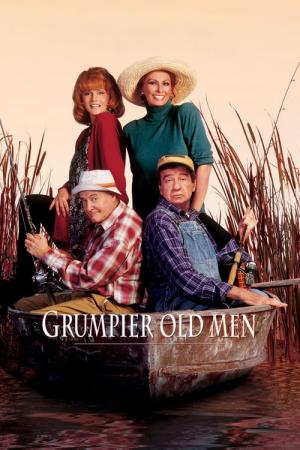
Grumpier Old Men: A Return to Wabasha County – Or a Detour?
The quaint, snow-dusted landscape of Wabasha County, Minnesota, became an iconic backdrop for one of the most beloved buddy comedies of the 1990s: *Grumpy Old Men*. When the sequel, *Grumpier Old Men*, arrived in 1995, anticipation was naturally high. Fans eagerly awaited another round of witty banter, heartwarming moments, and the delightful antagonism between cinematic legends Jack Lemmon and Walter Matthau. But did this follow-up manage to recapture the unique charm of its predecessor, or did it venture into a territory of cheap sentimentality and missed opportunities? This article delves into the legacy and reception of *Grumpier Old Men*, examining its strengths, its undeniable weaknesses, and its lasting, if sometimes divisive, place in romantic comedy history.
The Enduring Appeal of the Grumpy Duo
At its heart, *Grumpier Old Men* is a continuation of the captivating saga of John Gustafson (Jack Lemmon) and Max Goldman (Walter Matthau), two lifelong rivals who, by the end of the first film, had begrudgingly transformed their animosity into a deep, if still insult-laden, friendship. The 1995 romantic comedy picks up with the pair having seemingly found a new rhythm in their lives. The children of these two cantankerous neighbors, Melanie Gustafson (Daryl Hannah) and Jacob Goldman (Kevin Pollak), are now engaged, signaling a beautiful merger of their previously feuding families. This development theoretically promised an even richer tapestry of intertwined lives and comedic friction.
John, having finally married the new girl in town, Ariel Truax (Ann-Margret), six months prior, appears content. However, the narrative suggests a void in Max’s life, which is still primarily filled with his passion for fishing and the ongoing, unfulfilled quest to catch the elusive "Catfish Hunter"—a legendary, smiling behemoth that taunts local fishermen. The beloved, if unfiltered, Grandpa Gustafson (Burgess Meredith) is also back, maintaining his delightful irreverence and zest for life, still indulging in his cigarettes, drinks, and flirtations.
The plot thickens with the arrival of Maria Sophia Coletta Ragetti (Sophia Loren), a fiery Italian restaurateur who decides to buy the local bait shop, planning to convert it into a romantic restaurant. This immediately puts her at odds with Max, who sees his cherished fishing haven under threat. Maria's introduction sets the stage for a new romantic interest for Max, aiming to bring him out of his self-imposed bachelorhood and parallel John's newfound happiness. The witty one-liners and affectionate insults ("moron," "putz") between John and Max continue, serving as the bedrock of the film's humor, even as new characters and conflicts emerge.
A Star-Studded Return: Cast Chemistry and New Faces
The magic of *Grumpier Old Men* largely hinges on its incredible ensemble cast, a mix of returning favorites and iconic new additions. Jack Lemmon and Walter Matthau, in particular, remain the magnetic core. Their almost telepathic chemistry, honed over decades of collaboration, is the film's strongest asset. They effortlessly slip back into the roles of John and Max, portraying a friendship that’s both genuinely heartwarming and hilariously abrasive. Even when the script falters, their performances anchor the film, making it watchable for their sheer presence alone.
Sophia Loren's Impact and Burgess Meredith's Poignant Farewell
The introduction of Sophia Loren as Maria was undoubtedly a major draw. Loren, a screen legend, brings her undeniable charisma and dramatic flair to the role. Maria is designed to be Max's formidable match, a woman who can dish out as much as she takes. However, the critical consensus from some viewers suggested that her character, while intended to be vibrant, sometimes defied reason and felt somewhat disconnected from the established world of Wabasha. The reference context highlighted a particular critique of her "sunburnt and collagen ‘look’" as "creepy" and a moment when the film noticeably started its downhill trajectory for some viewers. While perhaps a harsh assessment of Loren herself, it speaks to how the character's portrayal and integration into the existing narrative didn't fully land for everyone.
Perhaps the most touching aspect of the returning cast was Burgess Meredith's performance as Grandpa Gustafson. This role marked his final film appearance, a poignant detail that adds another layer of emotion for fans. The reference context reveals that Meredith was battling Alzheimer’s disease during filming and had to be coached through his scenes. Despite these challenges, he delivers a performance that is still full of the character's signature charm, mischievousness, and surprisingly profound wisdom. His resilience and dedication, even in the face of such a debilitating illness, are a testament to his incredible talent and commitment to his craft, making his scenes particularly memorable.
Returning talents like Ann-Margret as Ariel and Daryl Hannah as Melanie also provided continuity, reinforcing the family ties and romantic elements. Kevin Pollak as Jacob and Ann Morgan Guilbert also contributed to the film's comedic and dramatic beats, rounding out a talented cast that, on paper, promised cinematic gold.
The Critical Reception: Why Grumpier Old Men Divided Audiences
While beloved by many for its comfort and nostalgia, *Grumpier Old Men* garnered a more tempered critical reception compared to its predecessor. Many reviewers, as highlighted in the provided context, found it to be "much weaker than the original." Where *Grumpy Old Men* was praised for its genuine charm and nuanced character development, the sequel was often criticized for leaning into "cheap sentimentality."
The ease with which conflicts arose and were resolved in *Grumpier Old Men* was a common point of contention. Critics felt that the film lacked the complexity that made the original so engaging, often defying credibility in its simplistic resolutions. The jokes, too, were deemed "not nearly as funny," suggesting a struggle to replicate the original’s comedic genius. This often happens with sequels; the pressure to recreate a beloved formula can lead to forced narratives and diluted humor. The reference context draws parallels to other sequels that struggled to recapture their magic, such as *Three Men and a Little Lady* to *Three Men and a Baby* or *Sister Act 2* to *Sister Act*, noting that the absence of a third installment in these series is telling.
For some, the film started strong, with the initial 15-20 minutes earning praise for capturing some of the original's spirit. However, the turning point for many was Sophia Loren's arrival, signaling a shift in tone and narrative focus that didn't resonate universally. While the film certainly "has its moments" and isn't the "worst film ever," it undeniably struggled to live up to the high bar set by its predecessor. The desire for a "Grumpy/Grumpier/Grumpiest" trilogy of consistent quality, as expressed in the reference, speaks to the potential that fans felt was left untapped.
To truly understand the nuances of the film's storytelling and character arcs, you might be interested in a deeper dive into specific plot points and character motivations. Explore further insights into the narrative choices made in
Grumpier Old Men - Article 2.
Beyond the Banter: Enduring Legacy and Fan Appreciation
Despite its critical shortcomings, *Grumpier Old Men* maintains a special place in the hearts of many fans. For those who grew up with the original, the sequel offered a welcome opportunity to revisit beloved characters and the familiar, comforting world of Wabasha. The undeniable chemistry between Lemmon and Matthau, even in a weaker script, is a powerful draw, reminding viewers of a golden era of comedic duos.
The film's humor, even if less sharp than the original, still delivered its share of "hilarious quotes" and "witty one-liners," particularly from the consistently amusing Grandpa Gustafson. These moments provide genuine laughs and contribute to the film's rewatchability for many. The underlying themes of enduring friendship, the challenges and joys of family, and the search for love later in life continue to resonate, offering a heartwarming core that transcends some of the narrative flaws.
For fans, *Grumpier Old Men* serves as a nostalgic trip, a piece of 90s cinema that evokes fond memories. It’s the kind of film that, despite its imperfections, can be enjoyed for its lightheartedness and the sheer comfort of seeing familiar faces.
If you’re looking for a film that offers a dose of nostalgia and the unique appeal of a legendary cast, *Grumpier Old Men* can be a perfect choice for a cozy night in. Consider watching it as a double feature with the original *Grumpy Old Men* to appreciate the evolution (or devolution, depending on your perspective) of the characters and narrative. For more detailed character profiles and a breakdown of their journeys, check out
Grumpier Old Men - Article 3.
Conclusion
*Grumpier Old Men* stands as a testament to the challenges of following up on a beloved classic. While it harnessed the formidable talents of its returning cast, particularly the legendary duo of Jack Lemmon and Walter Matthau, and introduced an iconic presence in Sophia Loren, it struggled to replicate the nuanced charm and comedic brilliance of its predecessor. Critics pointed to its sentimentality, simplistic plot resolutions, and less effective humor as reasons for its mixed reception. However, for a dedicated fanbase, the film endures as a heartwarming, if imperfect, continuation of a cherished story, offering another glimpse into the lives of John Gustafson and Max Goldman. It remains a significant piece of 1990s romantic comedy, celebrated for its cast's chemistry and its undeniable ability to evoke nostalgia, proving that even a "grumpier" sequel can still hold a special, if debated, place in cinematic history.