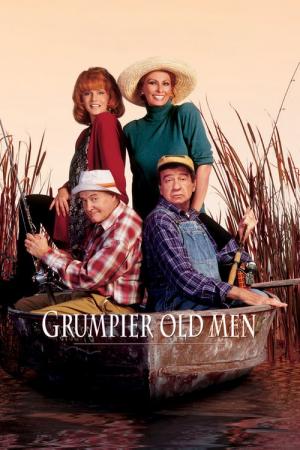
Revisiting Wabasha: The Enduring Charm (and Challenges) of Grumpier Old Men
In the world of cinematic sequels, few face the kind of expectation and scrutiny that followed Grumpy Old Men. The original film carved out a special place in the hearts of many with its unique blend of curmudgeonly humor, genuine heart, and the unforgettable chemistry between acting legends Jack Lemmon and Walter Matthau. Its 1995 follow-up, Grumpier Old Men, aimed to recapture that magic, bringing back the beloved residents of Wabasha, Minnesota, for another round of banter, fishing, and unexpected romance.
At the core of the story, we find John Gustafson (Lemmon) and Max Goldman (Matthau) no longer as bitter adversaries, but as exasperated, yet inseparable, friends. Their children, Melanie and Jacob, are now engaged, suggesting a future where their families are inextricably linked. The familiar dynamic remains, with their affectionate insults—"moron" and "putz"—serving as playful terms of endearment. This evolution in their relationship was a natural progression, offering fans a comforting continuation of their saga.
The film also saw the return of a stellar supporting cast, including Ann-Margret as Ariel, Daryl Hannah as Melanie, Kevin Pollak as Jacob, and Ann Morgan Guilbert as Mama. However, one of the most poignant returns was that of Burgess Meredith as Grandpa Gustafson. His character, a lovable rogue who still drinks, smokes, and chases women despite his age, continued to be a scene-stealer. Tragically, this would be Meredith's final film role, as he battled Alzheimer's disease during production, requiring careful coaching through his lines. His performance serves as a testament to his dedication and leaves a bittersweet note for fans of his illustrious career. For a deeper dive into the film's initial reception, you might want to check out Grumpier Old Men - Article 1.
The Sequel's Dilemma: Navigating New Love and Lingering Critiques
The transition from a beloved original to a successful sequel is often fraught with peril, and Grumpier Old Men faced its share of critical challenges. While the film wasn't universally panned, many viewers and critics found it to be a significantly weaker installment compared to its charming predecessor. The ambition was clear: to escalate the humor and romantic stakes, particularly for Max Goldman, who, six months after John's marriage to Ariel, seems to be missing something similar in his own life. His only solace, he claims, is fishing—specifically, the elusive "Catfish Hunter," a local legend said to be so gigantic it actually smiles at failed fishermen.
However, the narrative takes a noticeable turn with the introduction of a new character: Maria Ragetti, played by the iconic Sophia Loren, who arrives to transform the old bait shop into a bustling Italian restaurant. While Loren's star power was undeniable, her character and storyline were often cited as a turning point where the film began to lose its way. Critics often pointed to a sense of "cheap sentimentality" replacing the original's genuine charm, and conflicts that arose quickly only to be resolved with surprising ease, robbing the plot of any meaningful complexity or dramatic weight. Some even found Loren's character's "sunburnt and collagen ‘look’" to be rather unsettling, though acknowledging this was a flaw in the film's direction rather than the actress herself.
This struggle to replicate success is a common affliction for sequels, and Grumpier Old Men is frequently grouped with others that tried to follow a winning formula but faltered, such as Three Men and a Little Lady to Three Men and a Baby, or Sister Act 2 to Sister Act. The general consensus among many was that the jokes simply weren't as funny, and the situations often defied credibility, leading to a sense of disappointment among those who cherished the original. This is a common theme explored in various analyses, including those you might find in Grumpier Old Men - Article 2.
Beyond the Criticisms: Moments of Humor and Heart in Grumpier Old Men
Despite the prevailing critical opinion that Grumpier Old Men didn't quite hit the mark set by its predecessor, it's unfair to dismiss the film entirely. It certainly "has its moments," particularly within the first 15-20 minutes, which many found to be a strong start before the narrative ventured into more questionable territory. For fans of the original, simply seeing Lemmon and Matthau together again, trading their signature barbs and navigating their evolving friendship, was a pleasure in itself. Their banter, which now included calling each other "moron" and "putz" with a newfound warmth, remained a highlight, proving that even a weaker script couldn't entirely dim their comedic genius.
Grandpa Gustafson's role, despite Burgess Meredith's health challenges, continued to provide much of the film's enduring humor. His unflagging spirit, constant pursuit of women, and general irreverence were a comforting presence, reminding viewers of the original's lighthearted spirit. His witty one-liners and funny conversations with other characters are still quoted by fans today, showcasing that the film did indeed deliver on some of its comedic promises.
Moreover, the continuation of local Wabasha quirks, such as the legendary "Catfish Hunter," grounded the film in the charming small-town setting that made the original so endearing. While the narrative surrounding Sophia Loren's character might have been flawed, the film still offers a glimpse into how these beloved characters adapt to change and face new romantic prospects. For viewers willing to look past its imperfections, Grumpier Old Men can still be appreciated as a comfort watch—a chance to revisit familiar faces and enjoy their camaraderie without the pressure of direct comparison. One practical tip for re-watching: focus on the individual comedic beats and the stellar performances, rather than the overall plot coherence. There's real value in observing the nuanced facial expressions and reactions of such seasoned actors, which often transcend the script itself.
Conclusion: The Legacy of a Flawed but Familiar Friend
Ultimately, Grumpier Old Men stands as a fascinating case study in sequel dynamics. It's a film that tried earnestly to build upon the success of a beloved original, bringing back iconic characters and introducing new, vibrant personalities. While it may not have achieved the consistent quality or critical acclaim of Grumpy Old Men, and indeed faced significant critiques regarding its sentimentality and narrative simplicity, it still holds a place for many as a continuation of a cherished story. It serves as a reminder that even when a film doesn't quite reach its aspirational heights, the performances of legendary actors and the comfort of returning to a familiar, albeit grumpier, world can still provide moments of genuine enjoyment. For fans of John and Max, it's another chapter in their enduring, hilariously argumentative friendship, flaws and all.