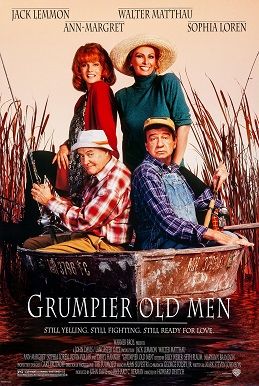
Grumpier Old Men: Revisiting the Challenging Second Chapter
When *Grumpy Old Men* delighted audiences in 1993, it quickly established itself as a beloved romantic comedy, celebrated for its razor-sharp wit and the undeniable chemistry between its legendary stars, Jack Lemmon and Walter Matthau. The film perfectly captured the enduring rivalry and eventual friendship of John Gustafson and Max Goldman, two curmudgeonly Minnesota neighbors. Given its success, a sequel was inevitable, and thus, *Grumpier Old Men* arrived in 1995, promising more laughs and further adventures for our favorite cantankerous duo. But did it live up to the high bar set by its predecessor? The critical consensus, and indeed many fan reactions, suggest a more complex answer, painting a picture of a film that, while not without its charms, struggled to recapture the original's magic.
*Grumpier Old Men* brought back the familiar faces that made the first film so special, including Lemmon, Matthau, Ann-Margret, Daryl Hannah, Kevin Pollak, Katie Sagona, and Ann Morgan Guilbert. It also introduced new dynamics with the addition of international screen icon Sophia Loren and a poignant final performance from the irreplaceable Burgess Meredith as Grandpa Gustafson. While the film aimed to replicate the heartwarming humor and relatable conflicts, it often veered into territory that left some viewers yearning for the genuine wit and deeper character development of the original.
The Return to Wabasha: What Changed, What Stayed the Same?
The sequel opens with a reassuring sense of continuity, yet also a clear evolution in the lives of John Gustafson (Jack Lemmon) and Max Goldman (Walter Matthau). Their decades-long feud has mellowed, transforming into a playful, almost affectionate banter where "moron" and "putz" are terms of endearment. This shift is heartwarming, illustrating the growth forged in the first film. Furthermore, their children, Melanie (Daryl Hannah) and Jacob (Kevin Pollak), are now engaged, signaling a new chapter for both families, entwined even more deeply than before.
Life in Wabasha County still hums with familiar rhythms. John has married the vibrant Ariel Truax (Ann-Margret), bringing a new warmth and stability to his life. Max, however, finds himself grappling with a subtle sense of loneliness, a void that John's happiness seems to highlight. His primary joy, he claims, remains fishing – specifically, the elusive "Catfish Hunter," a legendary giant that continues to evade capture and, as the local lore suggests, even smiles at its pursuers. The enduring presence of this mythical fish adds a layer of whimsical continuity to the narrative.
Perhaps the most poignant return is that of Burgess Meredith as Grandpa Gustafson. In *Grumpier Old Men*, Grandpa continues his delightful tradition of smoking, drinking, and chasing women, providing many of the film's most memorable one-liners and comedic moments. It's a testament to Meredith's incredible talent and dedication that he delivered such a strong performance, especially considering he was battling Alzheimer's disease during filming and required coaching through his lines. His scenes are a bittersweet reminder of his legendary career and the invaluable contribution he made to both films. For more insights into the original film and its characters, check out
Grumpier Old Men - Article 1.
A New Rivalry and the Sophia Loren Factor
The central conflict of *Grumpier Old Men* revolves around the arrival of Maria Ragetti (Sophia Loren), a fiery Italian restaurateur who purchases the local bait shop, much to Max's chagrin. Her plan to convert it into an upscale eatery disrupts the established, rugged charm of Wabasha, and more specifically, Max's cherished fishing haven. This sparks a fresh rivalry, initially between Max and Maria, that soon blossoms into an unexpected romantic possibility.
Loren's casting was undoubtedly a major draw, adding an international flair and a touch of glamour to the Minnesota setting. Her character, Maria, is designed to be Max's formidable match, an independent spirit capable of holding her own against his bluster. However, some critics found aspects of her portrayal and characterization less convincing than intended. The critique from "thecriticaleye" noted that her character "defied reason" and her "sunburnt and collagen 'look' was creepy," suggesting a disconnect between the vision and execution. While Sophia Loren herself is a beloved icon, the way her character was written and presented in *Grumpier Old Men* sometimes contributed to the feeling that the film traded genuine charm for cheap sentimentality. This new romantic entanglement, intended to parallel John's earlier journey, often felt manufactured, lacking the organic development that made the first film's relationships so compelling.
Navigating the Script: Humor, Sentimentality, and Credibility
Where *Grumpy Old Men* excelled in its witty, often biting humor grounded in decades of shared history, *Grumpier Old Men* frequently struggles to achieve the same comedic heights. Many critics pointed out that the jokes weren't nearly as funny, and the conflicts, while numerous, were often introduced and resolved with a surprising lack of complexity. This rapid-fire resolution, without delving into the emotional or psychological intricacies of the characters, can make the narrative feel superficial, stretching the boundaries of credibility.
The "cheap sentimentality" noted by some reviewers is a key differentiator. The original film earned its heartwarming moments through genuine character growth and reconciliation, but the sequel often felt like it was trying too hard to evoke emotion without the necessary build-up. This is a common pitfall for sequels attempting to replicate a successful formula. Much like *Three Men and a Little Lady* to *Three Men and a Baby* or *Sister Act 2* to *Sister Act*, *Grumpier Old Men* falls into the trap of "sequel-itis," where the desire for more of a good thing results in a diluted version. There’s a reason why these series often stop at two films – the magic is difficult to replicate consistently.
Despite these narrative shortcomings, *Grumpier Old Men* does have its moments. The continued banter between Lemmon and Matthau, even when the script isn't at its best, remains a highlight. Their comedic timing and rapport are so ingrained that they can elevate even weaker material. For fans of the original, these interactions provide a welcome dose of nostalgia. The film also offers a collection of memorable *Grumpier Old Men* quotes, particularly from Grandpa Gustafson, that continue to be shared and enjoyed by audiences.
The Enduring Legacy, Despite the Flaws
While it may not stand shoulder-to-shoulder with its predecessor, *Grumpier Old Men* is hardly "the worst film" ever made, as some reviews suggest. It has a definite place in the romantic comedy genre, particularly for those who cherish the golden age of Hollywood stars. The sheer presence of legends like Jack Lemmon, Walter Matthau, Ann-Margret, and Sophia Loren ensures a certain level of watchability, even when the plot wavers. Their performances, particularly the effortless dynamic between Lemmon and Matthau, are the film’s strongest assets.
For many, *Grumpier Old Men* serves as a comfort film, a familiar return to a world and characters they've grown to love. It’s a testament to the original’s impact that even a less robust sequel can still hold a special place in viewers' hearts. The film also provides a poignant farewell to Burgess Meredith, whose dedication to his craft, even while battling illness, is inspiring. His scenes are a final gift to his fans, cementing Grandpa Gustafson as one of cinema's most endearing and hilarious elderly characters.
If you approach *Grumpier Old Men* with tempered expectations, viewing it as a continuation rather than a direct competitor to the original's brilliance, you might find more to appreciate. Focus on the strong performances, the occasional witty one-liner, and the enduring charm of its lead actors. It's a film that, despite its imperfections, contributes to the cinematic legacy of its iconic cast and offers another glimpse into the lives of John, Max, and the eccentric residents of Wabasha. To delve deeper into the behind-the-scenes aspects and fan theories, make sure to read
Grumpier Old Men - Article 3.
In conclusion, *Grumpier Old Men* is a sequel that, despite its noble intentions and stellar cast, couldn't quite replicate the magic and genuine charm of the original *Grumpy Old Men*. It offered a diluted formula, leaning on cheap sentimentality and easily resolved conflicts, leading to a largely lukewarm critical reception. However, the sheer star power of Jack Lemmon, Walter Matthau, and the late Burgess Meredith, alongside the introduction of Sophia Loren, provides enough moments of humor and heartwarming connection to make it a watchable, if flawed, follow-up. It remains a valuable case study in the challenges of sequel creation, yet for fans, it offers another chance to spend time with beloved characters, proving that even a grumpier, less perfect outing can still hold a special place in cinematic history.